Personal Finance Books That Reveal How Money Really Works | DebtInterestCalculator.com

DebtInterestCalculator.com

Decipher
the Clues

The personal finance books on this list are not here to motivate you. They are here to show you something. If everyone were wealthy, no one would need to work. That’s not cynicism. That’s systems design.

Debt isn’t a side effect of the financial system — it’s the engine. Minimum payments. 30-year mortgages. Revolving credit. Each mechanism was refined over decades to keep money flowing in one direction while feeling completely normal to the people it flows from.

The people who built these systems understood exactly what they were building. Some of them wrote it down. Others studied it from the outside and wrote what they found.

Each book on this list contains clues. Applied correctly, they reveal the path — to understanding how money actually moves, who it moves toward, and what it takes to redirect it.

This is not a reading list. It is a cipher. Start anywhere. Every clue connects.

The path was always there. Hidden in plain sight. Now you know where to look.

Some links on this page are Amazon affiliate links. If you purchase through them we earn a small commission at no additional cost to you. We only recommend books we genuinely believe contain valuable clues. Your purchase helps keep this site free.
Personal Finance Books — The Clues
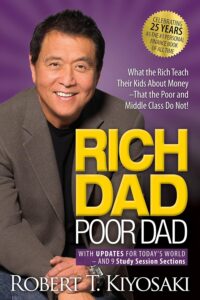
Rich Dad Poor Dad — personal finance book by Robert Kiyosaki
01
The Foundation Robert Kiyosaki
Rich Dad Poor Dad
The book that introduced millions to the most important distinction in personal finance: assets put money in your pocket, liabilities take it out. Two men. Two completely different relationships with money. One taught his son to work for money. The other taught his son to make money work for him. This is the first clue — and for most people, the one that changes everything.
What this clue reveals
  • Why your house may not be the asset you think it is
  • The difference between the financial education the wealthy receive and the one everyone else gets
  • Why working harder for a paycheck is the system working exactly as designed
  • How to begin building assets that generate income without your labor
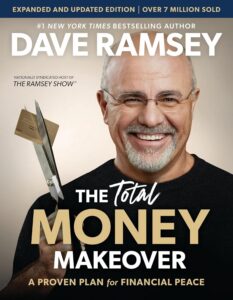
The Total Money Makeover — personal finance book by Dave Ramsey
02
The Blueprint Dave Ramsey
The Total Money Makeover
Where Rich Dad Poor Dad shifts your mindset, this book gives you the steps. Ramsey’s Baby Steps framework has guided millions out of debt through a structured, sequential approach. Methodical, practical, and uncompromising on the math. If Clue #1 shows you the door, Clue #2 shows you how to walk through it.
What this clue reveals
  • A proven sequential framework for eliminating every form of debt
  • Why the debt snowball works psychologically even when the avalanche wins mathematically
  • How to build a fully funded emergency fund before anything else
  • The exact order of financial operations that builds lasting security
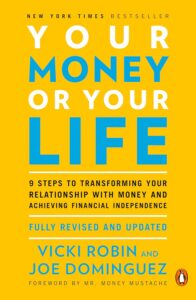
Your Money or Your Life — personal finance book by Vicki Robin
03
The Reframe Vicki Robin & Joe Dominguez
Your Money or Your Life
Money is not currency. Money is life energy — the hours of your finite existence that you trade for it. This book reframes every purchase as a question: how many hours of your life did this cost? Once you see spending through that lens, the impulse buy at 22% APR becomes something else entirely. One of the most quietly radical books in personal finance.
What this clue reveals
  • How to calculate the real hourly cost of your lifestyle
  • Why the relationship between spending and fulfillment is not linear
  • The concept of financial independence as a function of the gap between income and expenses
  • How to align spending with what actually matters to you
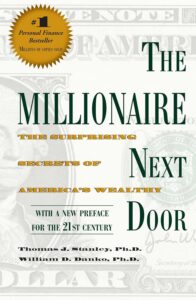
The Millionaire Next Door — personal finance book by Thomas Stanley
04
The Data Thomas J. Stanley & William D. Danko
The Millionaire Next Door
Researchers spent years studying actual millionaires and found something nobody expected: they don’t look rich. They drive used cars. They live in modest houses. They don’t own boats. The people who look rich are almost never rich. The data dismantles the appearance-of-wealth myth more thoroughly than any argument could — because it’s not an argument. It’s research.
What this clue reveals
  • The statistical profile of actual wealth — and how different it looks from perceived wealth
  • Why high-income earners are often the least wealthy people in the room
  • The behavioral patterns that consistently produce financial independence across demographics
  • Why the quest to look rich is one of the most reliable paths to staying poor
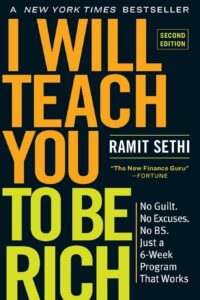
I Will Teach You To Be Rich — personal finance book by Ramit Sethi
05
The System Ramit Sethi
I Will Teach You To Be Rich
The most practical book on this list. Sethi doesn’t deal in philosophy — he deals in systems. Automate your savings. Negotiate your bills. Optimize your credit cards without carrying a balance. Set up accounts that move money without your involvement. The insight here is that good financial behavior shouldn’t require willpower — it should be engineered into the system.
What this clue reveals
  • How to automate savings and investing so it happens before you can spend it
  • The right way to use credit cards without becoming their product
  • How to negotiate interest rates, fees, and bills most people assume are fixed
  • A practical account structure that puts good financial behavior on autopilot
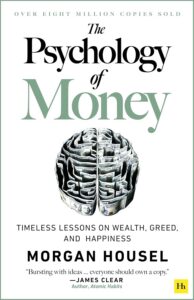
The Psychology of Money — personal finance book by Morgan Housel
06
The Behavior Morgan Housel
The Psychology of Money
Knowing what to do and actually doing it are two completely different things. This book explains why — and it’s not a character flaw. Financial decisions are made under uncertainty, with incomplete information, shaped by personal history and emotion. The people who build wealth aren’t necessarily smarter. They’ve just developed a relationship with uncertainty that allows them to stay in the game long enough for compounding to work.
What this clue reveals
  • Why behavior matters more than intelligence in personal finance
  • How compounding works — and why most people underestimate it until it’s too late to start
  • The role of luck, risk, and narrative in how we understand financial success and failure
  • Why the goal of wealth is not more money — it’s more control over your time
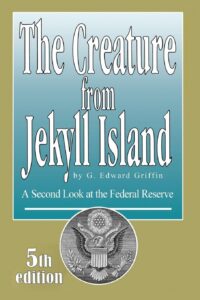
The Creature from Jekyll Island — personal finance book by G. Edward Griffin
07
The Architecture G. Edward Griffin
The Creature from Jekyll Island
In November 1910, a group of the most powerful bankers in America boarded a private train under assumed names and traveled to a secluded island off the Georgia coast. What they designed there became the Federal Reserve System. This is not conspiracy theory — it is documented history. Griffin traces the architecture of modern banking from that meeting to the present, and the picture it reveals is the most important clue on this list for understanding why the system works the way it does.
What this clue reveals
  • How the Federal Reserve was created — and by whom, for what purpose
  • How money is created from debt and what that means for inflation
  • Why the banking system is structured to concentrate wealth upward
  • The historical context that explains why consumer debt is so profitable for lenders
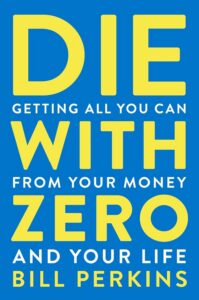
Die With Zero — personal finance book by Bill Perkins
08
The Optimization Bill Perkins
Die With Zero
A deliberate counterweight to the accumulation mindset. Perkins argues that most people optimizing for maximum wealth at death are making a fundamental error — they’re trading life experiences for a number on a spreadsheet. The goal isn’t to die rich. It’s to convert your wealth into experiences at the right times in your life. This clue asks a harder question than the others: once the debt is gone and the wealth is building, what is it actually for?
What this clue reveals
  • How to think about the timing of experiences relative to your age and health
  • Why over-saving can be as costly as under-saving in life terms
  • The concept of memory dividends — experiences that pay returns for decades
  • How to balance building wealth with actually living the life it’s supposed to enable
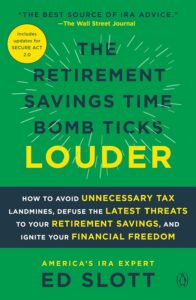
The Retirement Savings Time Bomb — personal finance book by Ed Slott
09
The Exit Ed Slott, CPA
The Retirement Savings Time Bomb
You’ve spent decades building a retirement account. The government has been your silent partner the entire time — and when you withdraw, they collect. Most people discover this too late to do anything about it. Slott reveals the tax strategies that allow you to keep more of what you’ve built. The Roth IRA you’ve been building isn’t just an investment vehicle — it’s a tax strategy. This book explains why that matters more than almost anything else in retirement planning.
What this clue reveals
  • How the IRS becomes a partner in your retirement savings — and how to minimize their share
  • The strategic case for Roth conversions and when they make sense
  • Required minimum distributions and the tax traps most people walk into unprepared
  • How to pass wealth to the next generation with minimal tax erosion

The path was always there

The calculators on this site show you the numbers. These personal finance books show you why the numbers are what they are. Used together, they form a complete picture — one most people spend their entire working lives never seeing.

Return to the calculators